Once, machine translation was a punchline. Now, it's a passport.
In just a few years, AI translation has evolved from clunky and literal to context-aware, emotionally resonant, and—dare we say—poetic. But how did we get here? And where are we headed?
Let’s explore the journey from the early days of neural networks to the speculative future of AI translation in the next century.
The Leap: From Neural Networks to Generative AI
In the early 2020s, Neural Machine Translation (NMT) systems like Google's and DeepL's were state-of-the-art. They used encoder-decoder architectures to process entire sentences, leading to more fluent translations than earlier phrase-based systems.
However, these systems had limitations:
- Struggled with low-resource languages.
- Often missed cultural nuances.
- Required large parallel corpora for training.
Enter Generative AI.
By 2023, large language models (LLMs) like GPT-4 began to outperform traditional NMT systems in many tasks. These models, trained on vast amounts of multilingual data, could translate text with impressive fluency and contextual understanding—even in zero-shot settings.
A 2024 study found that GPT-4 achieved parity with human translators in certain domains, particularly for high-resource language pairs.
The Present: AI Translation in 2025
Today, AI translation is more accessible and accurate than ever:
- Real-time speech translation: Tools like Meta's smart glasses offer live translations between English and several other languages.
- Integration in communication platforms: Microsoft Teams now includes AI-powered real-time speech-to-speech translation, facilitating multilingual meetings.
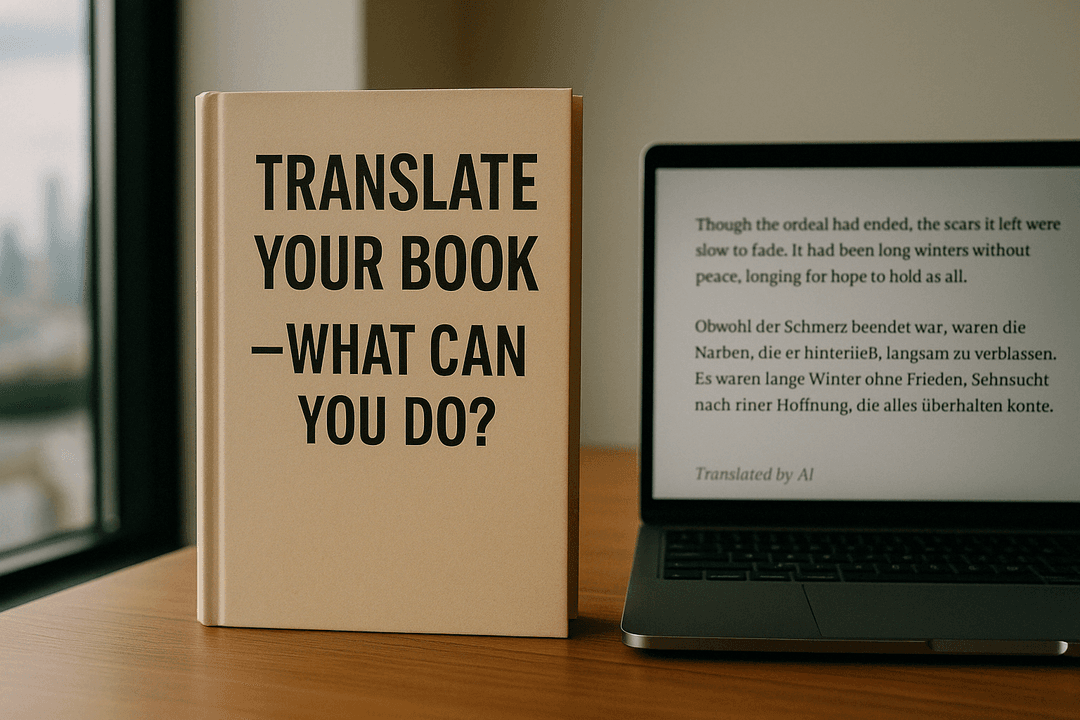
- Support for low-resource languages: Google's PaLM2 model added 110 new languages, including 31 African languages, bridging significant language gaps. Moreover, platforms like Atlazis allow authors to translate entire books, preserving tone and style, and reaching global audiences without the traditional barriers.
The Challenges: What's Still Hard?
Despite advancements, AI translation isn't perfect:
- Cultural context: AI still struggles with idioms, humor, and cultural references.
- Low-resource languages: While progress has been made, many languages lack sufficient data for high-quality translation.
- Ethical concerns: Issues around data privacy, consent, and the potential loss of linguistic diversity remain pressing.
The Future: AI Translation in 2125
Projecting 100 years into the future is speculative, but based on current trends, we can imagine:
1. Universal Real-Time Translation
Imagine contact lenses or neural implants providing instantaneous translation of speech and text, making language barriers virtually nonexistent.
2. Preservation and Revitalization of Languages
AI could help document and revitalize endangered languages, creating comprehensive databases and learning tools, ensuring linguistic diversity thrives.
3. Emotional and Cultural Intelligence
Future AI might not only translate words but also convey emotions, humor, and cultural nuances, making translations indistinguishable from native expressions.
4. Personalized Translation Models
Individuals could have personalized AI translators, adapting to their unique speech patterns, preferences, and cultural backgrounds.
Conclusion: A Symphony of Understanding
From its humble beginnings, AI translation has become a powerful tool for global communication. As we look to the future, the fusion of technology and human creativity promises a world where language is no longer a barrier but a bridge.
Ready to be part of this linguistic revolution? Explore Atlazis and let your words resonate worldwide.
Note: This article is speculative and based on current technological trends and projections.